








About this item
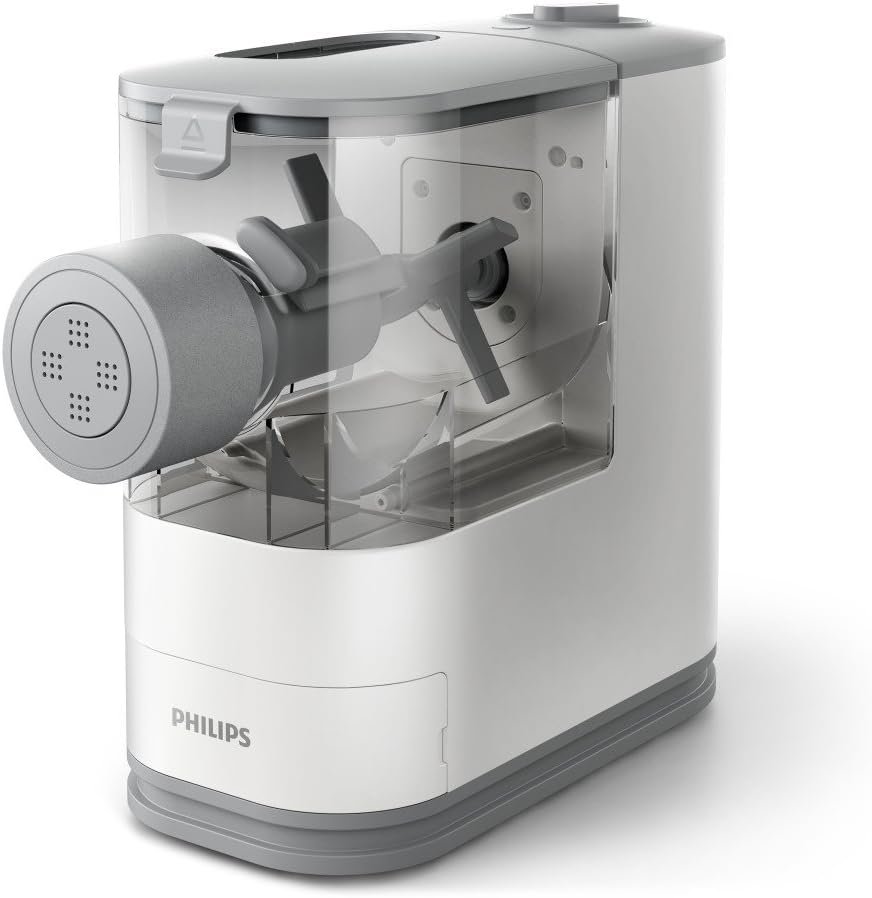
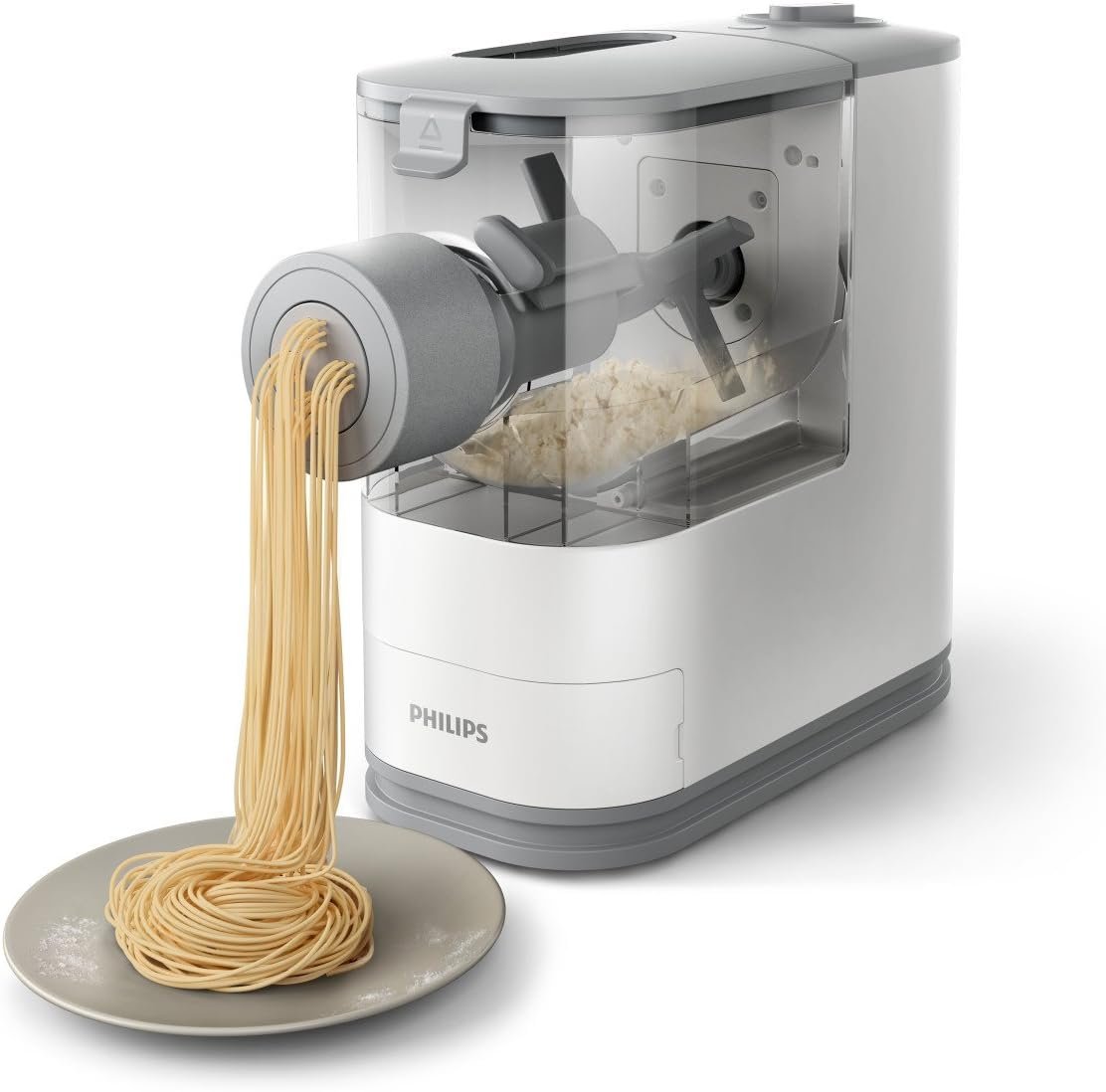
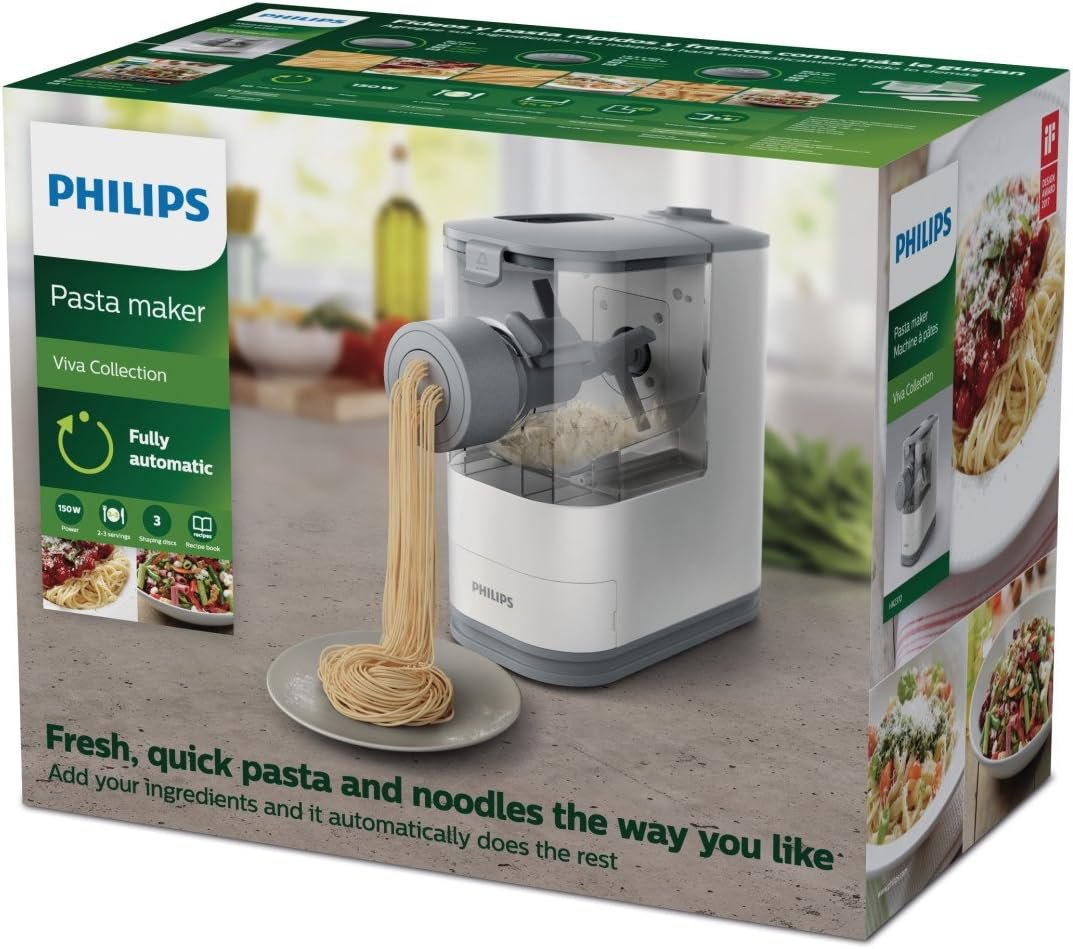
- Automatically kneads and extrudes 2-3 servings of fresh pasta in just 18 minutes thanks to uniquely designed stirring bar. Cord length : 40 Inches
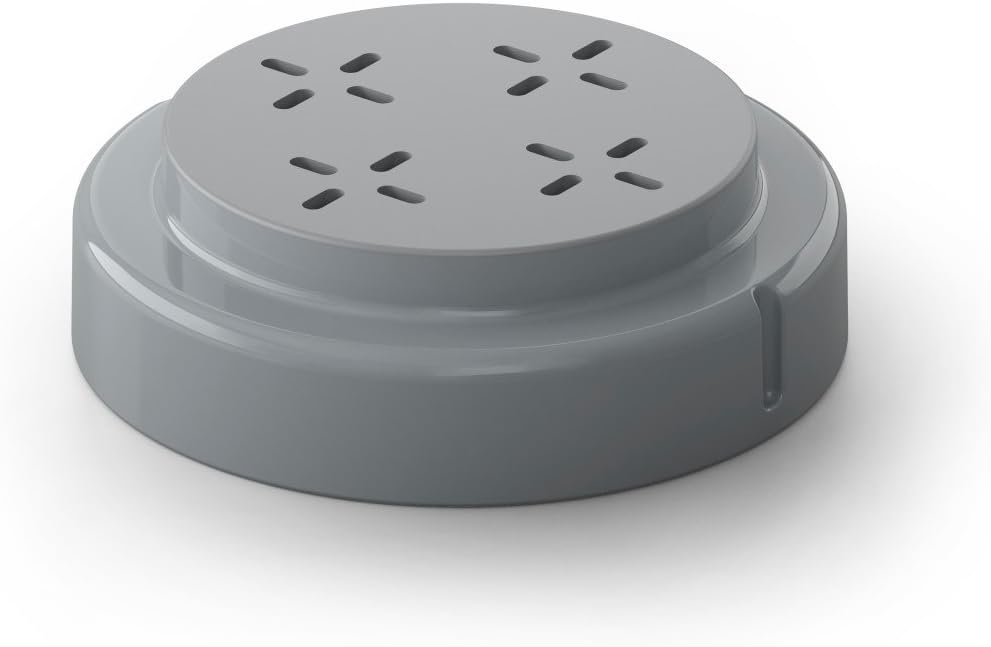
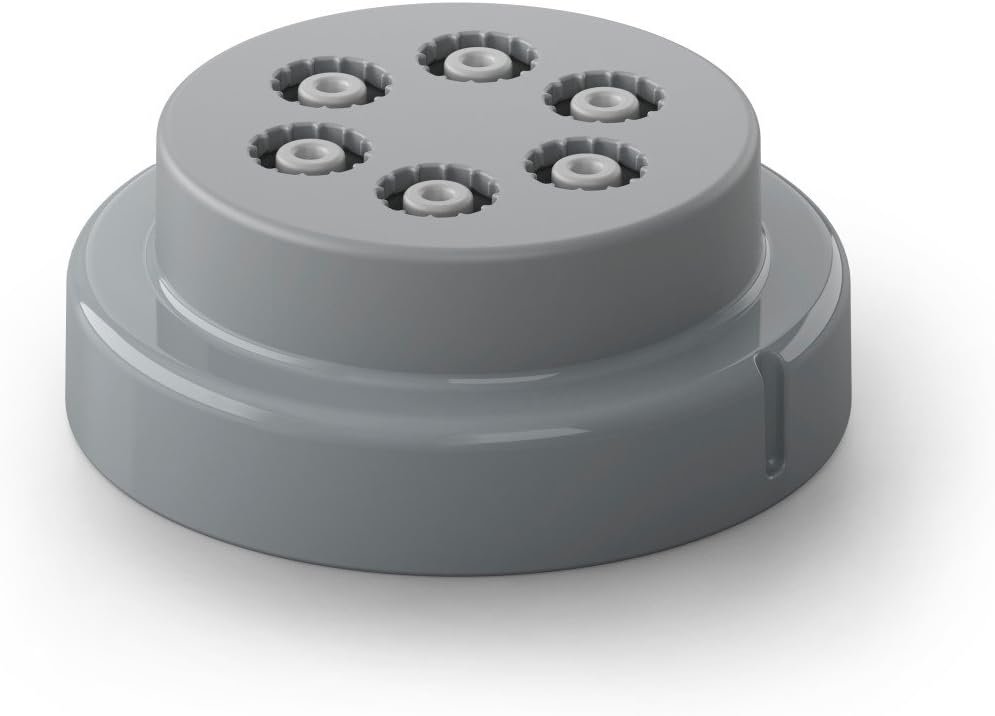
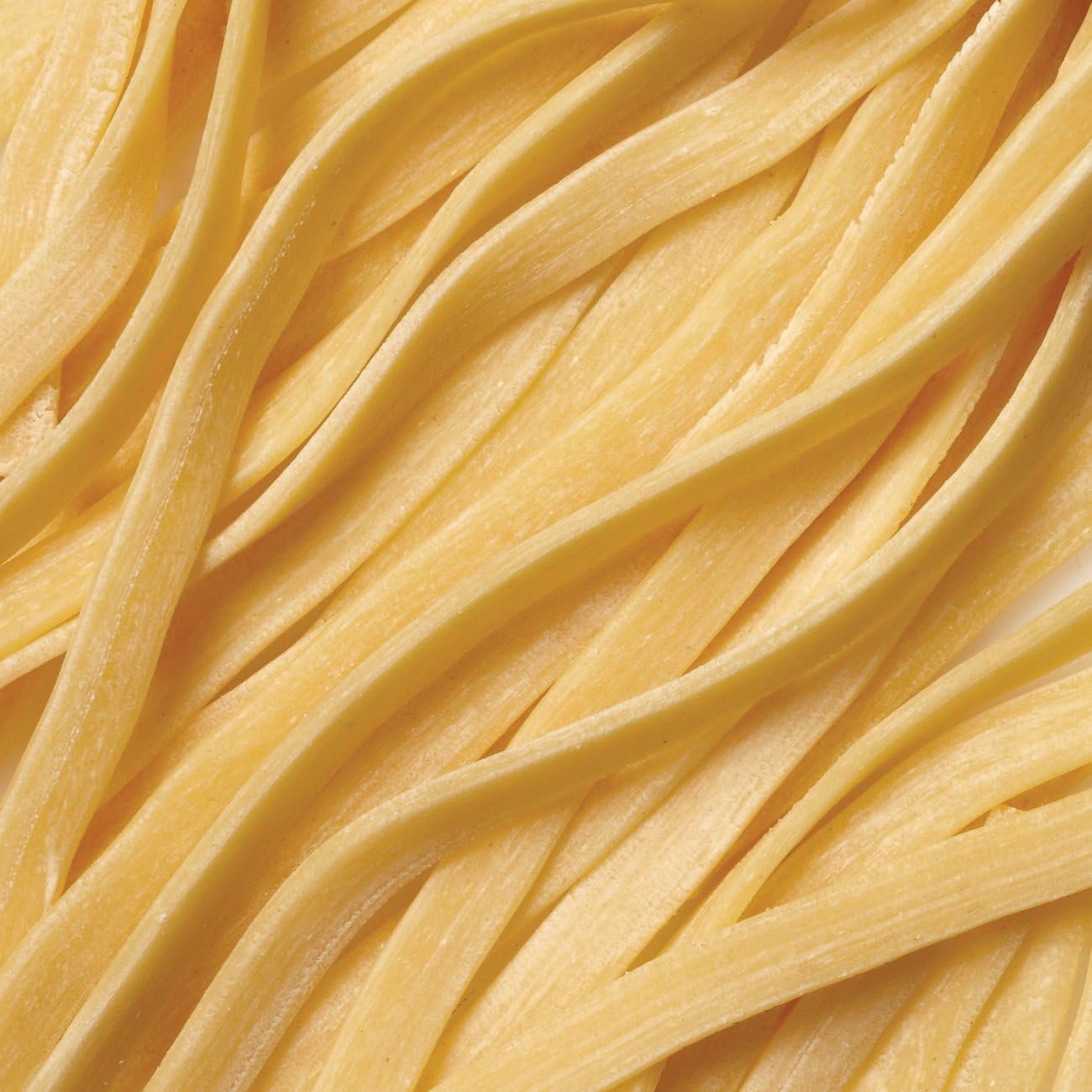
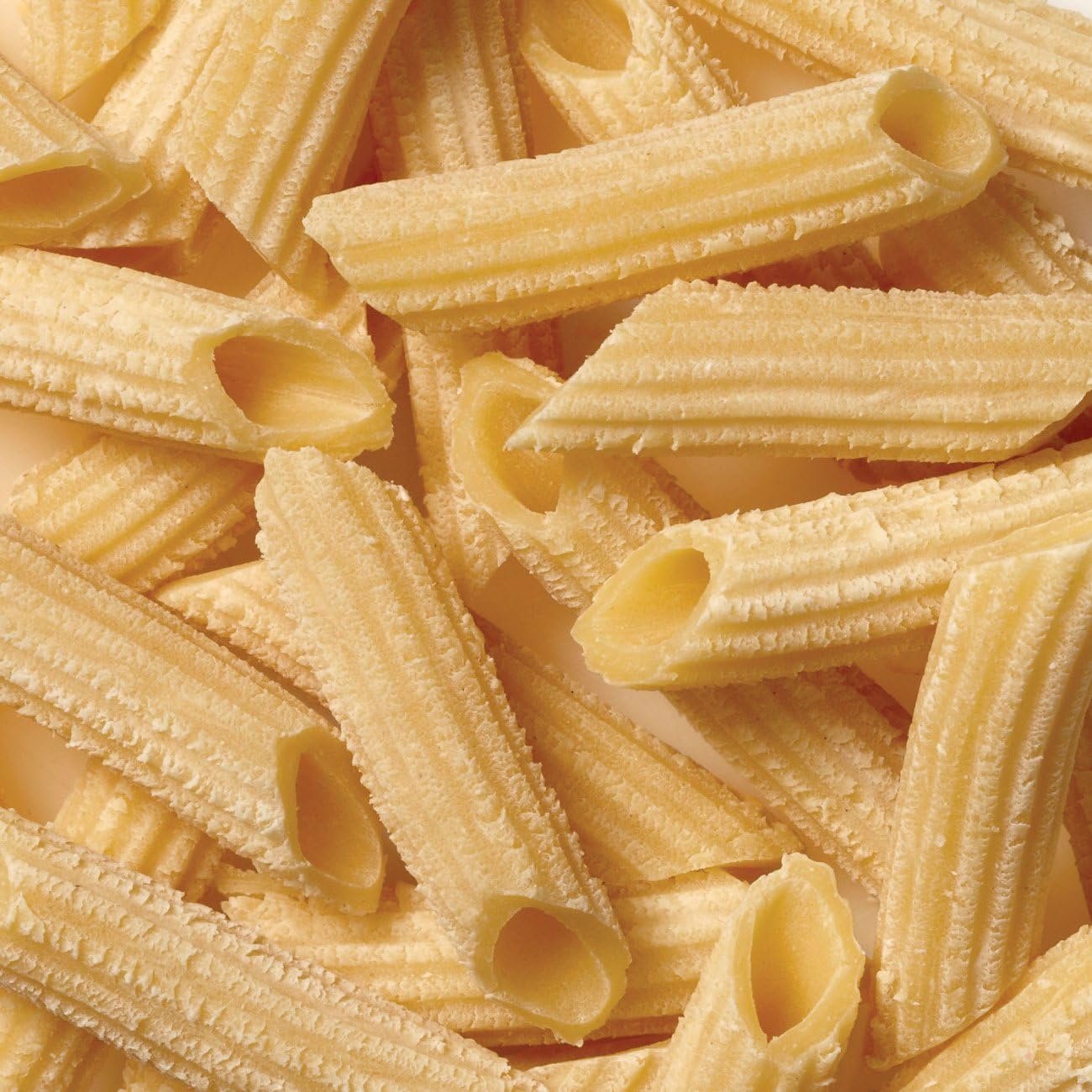
- With the machine there are 3 default classic shaping discs for Spaghetti. Penne and Fettuccini. The special shaping discs enable a double extrusion process to assure smooth pasta and noodles consistently
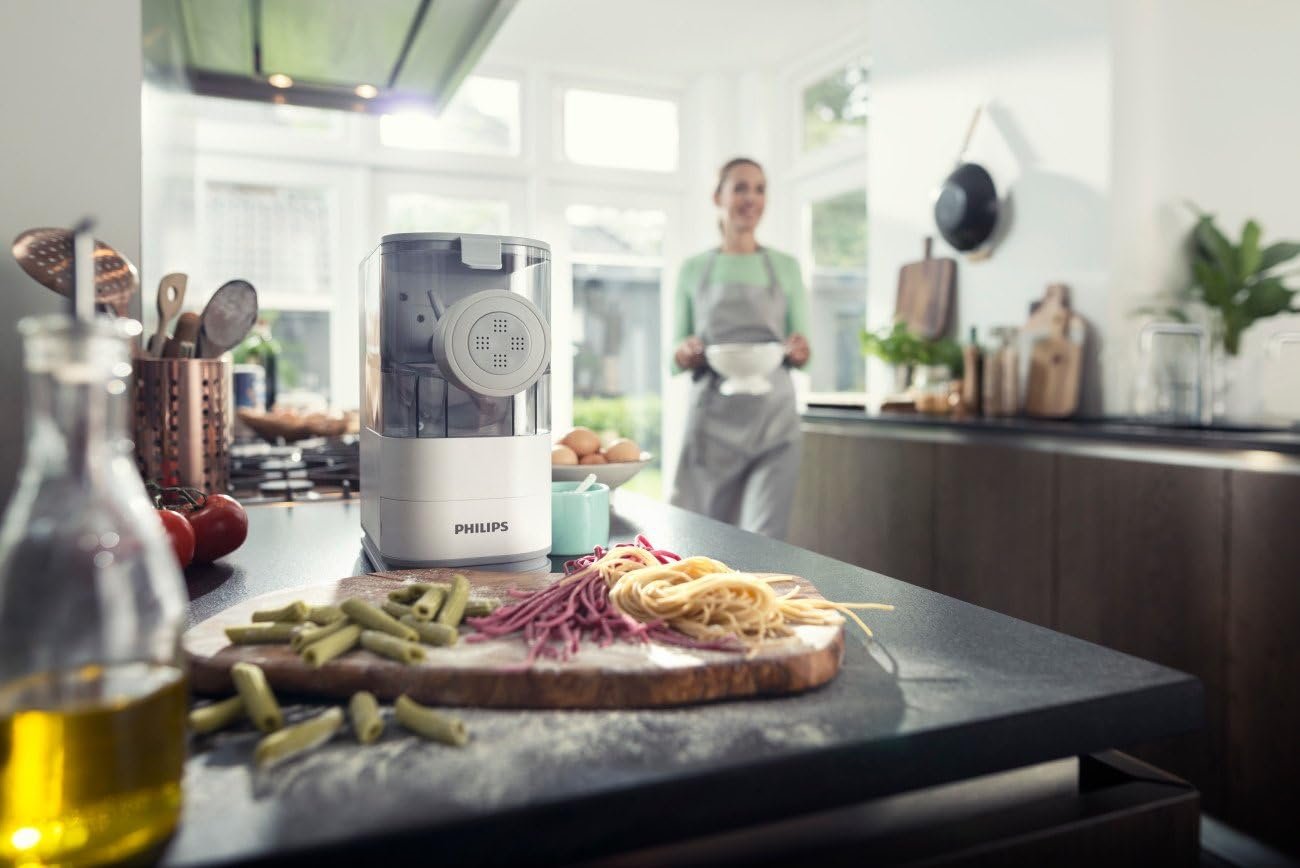
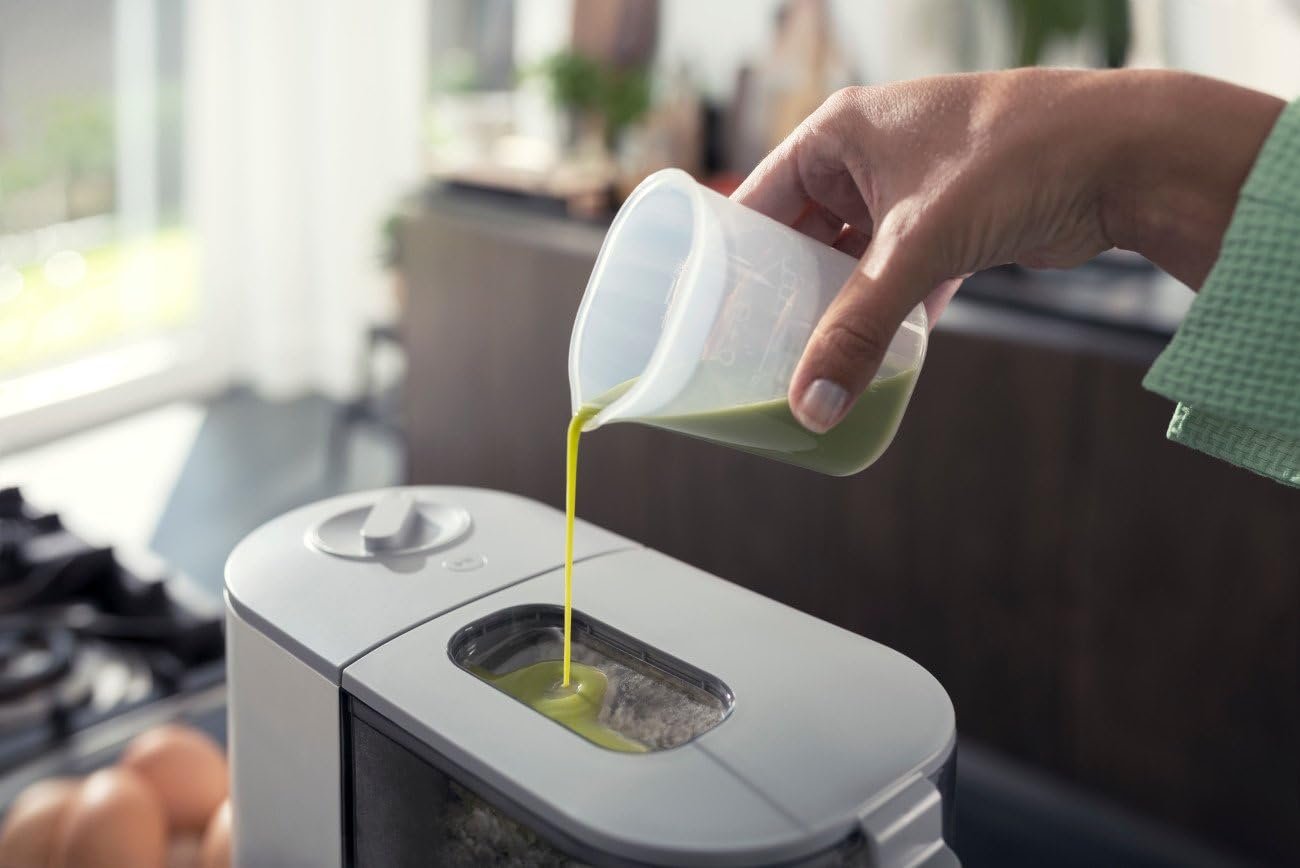
- By using different flour and adding different ingredients like egg. herbs or spinach and carrot juice. you can make various types and flavors of pasta
- Space saving design allows you to keep it out on the counter for everyday use
- Smart built-in storage for shaping discs
From the manufacturer


Why Choose Philips?
- Philips is a diversified company, focused on improving people’s lives through meaningful innovation
- Focused in the areas of Healthcare, Consumer Lifestyle and Lighting
- The Philips brand is synonymous with innovation, products and services of high quality
Philips Viva Pasta Maker – Fresh, quick pasta the way you like
Add ingredients and it automatically does the rest
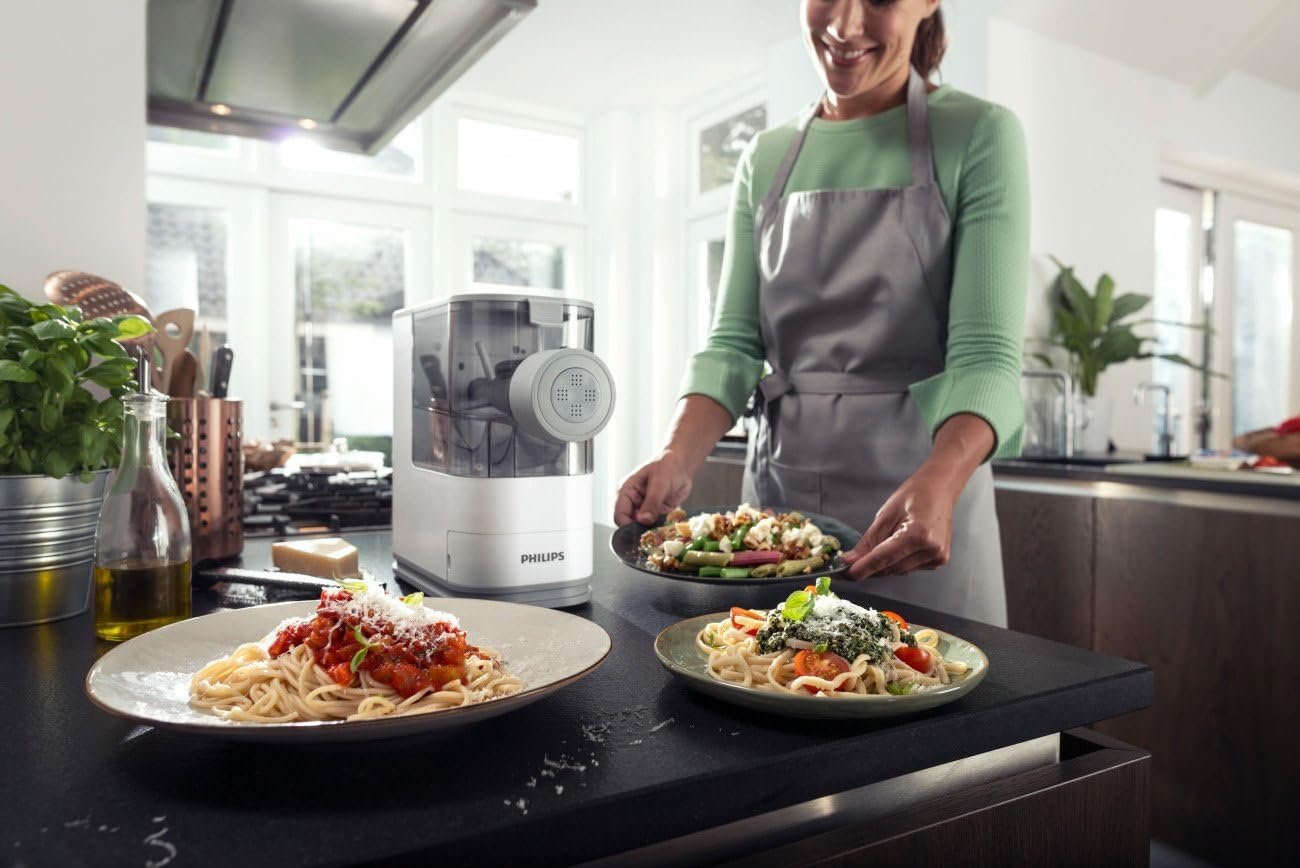
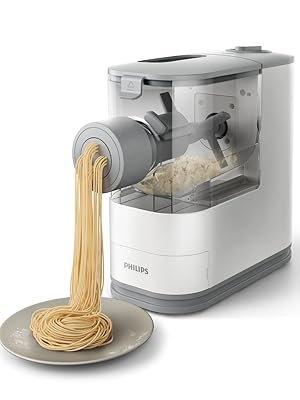
A fully automatic solution that enables you to prepare fresh pasta and noodles from scratch. With its compact size, it easily fits on your kitchen counter for quick, everyday use.
- Automatically kneads dough and shapes pasta
- Make 2-3 servings of fresh pasta in just 18 minutes
- 3 classic pasta types: spaghetti, penne, fettuccine
- Free colorful recipe book full of inspiration
Features
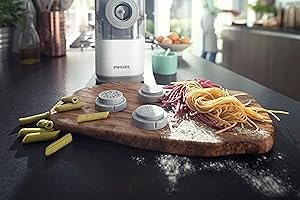
Fresh Pasta in Minutes
We’ve made it easier to make homemade pasta. Now, with the fully automatic Philips Viva Compact Pasta Maker, you can make fresh pasta and noodles much more often. Because your new pasta maker does all the hard work for you.

Fully Automatic
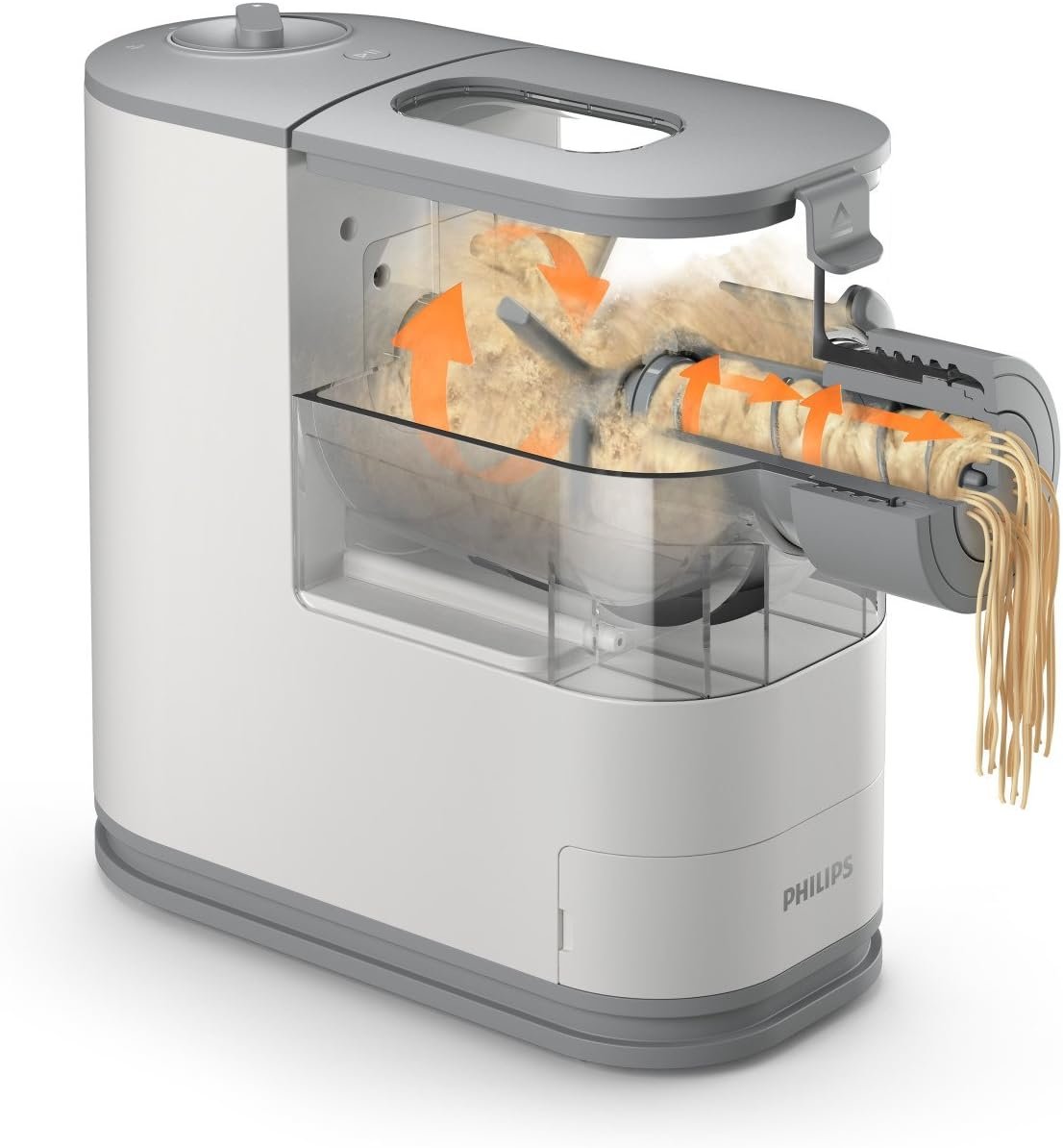
The Philips Viva Compact Pasta Maker mixes, kneads and extrudes pasta in just 18 minutes, and guarantees great texture and taste.

Unique Stirring Bar Design
Featured with angled multi-pins, the stirring bar ensures the flour and liquid is mixed evenly and thoroughly from every corner in the mixing chamber.
Features
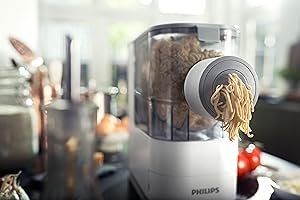
Long Kneading Tube
The long kneading tube guarantees optimal kneading, resulting in the perfect dough consistency.
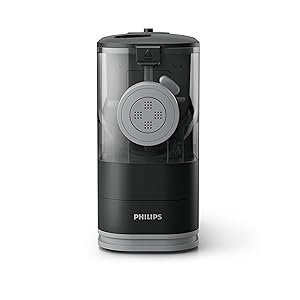
Compact and Modern Design
Due to its seamless and compact design, you can keep it out on the countertop or store in the cabinet without occupying a lot of space.

Easy Operation and Cleaning
With the detachable components, Philips Viva Compact Pasta Maker can be easily setup, dismantled and cleaned.
Gluten Free Pasta Recipes

Gluten Free Pasta Recipes for the Philips Viva Compact Pasta
If you would like to make gluten-free pasta at home with the Philips Viva Compact Pasta maker, we recommend you to use a gluten free flour such as Buckwheat, Quinoa or Chickpea and in some cases add extra thickener such as Xanthan gum. Xanthan gum is a gluten-free polysaccharide which acts as good binding agent to give pasta extra bounce. Note that flours like coconut, almond and rice contain no binder so they should be combined with other flours to increase the chance of success.


Recipe #1
200 grams garbanzo bean flour (we used Bob’s Red Mill)
70ml egg mixture* (1 egg + water)
*egg mixture = add egg(s) first to the included liquid measuring cup then add water to reach total amount indicated in recipe.
Recipe #2
140 grams buckwheat flour (we used Bob’s Red Mill)
60 grams rice flour (we used Bob’s Red Mill)
2 tsps oil
115 ml water.
Recipe #3
100 grams buckwheat flour (we used Bob’s Red Mill)
100 grams chestnut flour (we used Bob’s Red Mill)
½ tsp carob flour or Xanthan gum
90 ml water
1 tbsp oil
It did take me a few tries to actually get pasta. The book that comes with the machine recommended 80g water+egg per 200g of AP flour, but when I tried that ratio the machine jammed and was a pain to clean. After a couple tries of 80/200 I decided to try 90g water+egg/200g of AP flour and I finally had some pasta. Now that I know the ratio that works I love the machine, but the learning curve was frustrating. As far as cleaning, it's actually easier to clean than I would have thought.
I would probably give this 4.5 stars if that was an option. The first day with the machine was very frustrating, the next two months were exactly what I imagined.
Pros: Great pasta that's reasonably easy to make.
Cons: A pain to clean (well). Can be finicky to put back together.
Some lessons. Firstly, follow the directions for the relative amounts of fluid and flour. It will look too dry. This is correct. You should get one of the little digital kitchen scales that are accurate to a gram to correctly measure the weights. Otherwise the mixture will be off, and you'll get results from the pasta falling apart or having trouble coming out, or not at all.
Secondly, mix together the egg and fluid well before putting it in the unit. Otherwise the yolk might just get stuck around the axle and the pasta won't be as tasty.
Thirdly, the unit is finicky when being put back together. One mistake I made is not getting the axle in far enough. You'll know this is the case because a) the exterior knob doesn't go on all the way, so some threads show or b) you'll hear the machine working, but the axle won't spin. Once this occurs, you really need to take it apart and put it back together again. Otherwise for some reason the axle just won't go in all the way.
Overall, I think it's a great little machine that can be a bit of a pain. As long as you accept that it will be some work to clean, and be careful putting it together, I think you'll enjoy having fresh pasta.
My only minor complaint is that there is not enough room in the drawer to store all the dies if you order the additional ones.
My recommendations, for the dry measure, weigh the semolina and flour using a scale. These measurements must be accurate if you want perfect pasta.
If you use dry herbs, add just a touch more liquid. The dry herbs absorb liquid and will leave the dough too dry to press through the dies if you don't. I'm still working on how much more liquid. I like adding basil to my pasta.
A word of caution, do not over tighten the die bezel.
Prior to adding the liquid, give it 3 revolutions before adding the liquid. This will allow the semolina and flour to premix, resulting in a better consistency.
Once you get all of this, you'll never go back to that dried stuff.
3/15/21 update. I just had a batch that wouldn't press through the die. Interesting that I used very large eggs which required less water to stay within the 150 ml limit for a double batch. I ended up recycling the run cycle adding 2 tablespoons of water. On the 3rd tablespoon, the dough had definitely changed consistency. When the machine reversed, the pasta came out perfect.
Stick with the same size eggs you're used to. Seem like the machine needs a certain minimum amount of water without over doing it.
I forgot to double the amount of egg & water to the 400 g doubled flour amount. It called for 150 g semolina and 50 g white flour. Liquid measure was supposed to read, 75 ml after you add 1 egg and top the liquid up to make it that amount. Double that would have been 150 ml. Instead, I was tearing my hair out wondering why it said to add grams instead of ml. My husband was probably right when he told me at that point that I shouldn’t have drunk any of the whiskey he had just brought home from a trip out to the local liquor store. lol
I ended up with a big ball of dough that I knew, from past experience with an old machine I used to own, was too wet. I had to stop & rethink everything. I didn’t want to throw all that dough & egg away. I decided to split it into 2 halves & add another 100 g of flour, acc. to the included dry ingredients measuring cup, to each of the 2 separate batches I was about to remix.
I didn’t have white AP flour I could use for adding to the dough. A few days prior, the new bag I just recently bought at the grocery store had a worm in the top when I opened it. I had to throw the whole bag away! I didn’t know I had another bag of white flour in storage until after I finished making the pasta in this machine! I found some bread flour I had in storage and added that in place of the white AP flour to the over-moist semolina dough mixtures.
Somehow miraculously, it all worked out and I was able to extrude 2 good batches of pasta when all was said and done! FYI, I liked very much that the machine automatically went back to remixing the dough left in the machine so that it could extrude more of it out. But even after that, there was still residual dough left in it that it was unable to pick up and push through the extruder.
The solution: take it out of the machine and push it back into the rectangular opening where the screw turning mechanism pushes it through to get it to extrude it. When you’ve done this enough times and you still have a small amount of dough left, make it into noodles by hand. Stretch it out between the palms of your hands and roll it into round noodle shapes. Having been a pottery artist for many years, this is very easy for me but I don’t think it’s hard for anyone to do.
Another thing I had fun doing was pushing out the “buttons” of pasta dough that gets stuck in the dies, and cooking them in with the rest of the past without changing their shapes. You can reshape them if you want. And you can do the same with any and all the little bits of dough that gets left out.
If you really want to get into it & you’ve made a bigger mistake that leaves a larger quantity of unextruded dough, you can get out your rolling pin. Roll the dough out into a flat sheet. Then cut it in noodle-shape slices. Where there’s a will, there’s a way!
Another issue I had with the instructions is how it says to place the die on the opening by putting the non-existent arrow at the top. There are lines in die opposite each other but they don’t end up centered at the top if you push the die in firmly enough so that its little teeth fit into slots on the machine end that hold the die in place. This was very confusing. I didn’t know if I should keep the die loose and not push it into the machine or push it hard enough to make the teeth mesh with the gaps molded in on the machine. Very hard to describe the problem but if you’ve tried this, I think you’ll know what I’m talking about.
Positives- I like the improvements they’ve made to this type of machine such as the built-in storage drawer on the bottom. The whole process being automatic from mixing to extruding is very nice. It’s nice and compact which is a big reason I bought this instead of the larger model. The scraper with metal rods built in at both ends is very handy for poking dough out of the holes in the dies when they need cleaning or if you need to clear a few holes while it extrudes and they get plugged up.
Can’t wait to try this again with a better start the next time we want to eat pasta. Not sure if this machine’s motor is strong enough for it to last. I bought the added coverage in case it breaks down. I also bought the extra dies elsewhere that will fit this machine & await their arrival so that I can try them out.
My first batch didn't turn out well at all. Instead of interpreting the instructions for liquid correctly, I added 80 mL of water plus an egg. What I got was a mixture that was far too moist and couldn't even extrude! It took quite a while to clean up the the pasta maker and remove the dough from the paddle and extruder. Not to be daunted, and recognizing my mistake, I tried again.
My second batch was perfect. I used the basic recipe of 200 grams of flour to 80 mL (total) of liquid and the pasta started to extrude after about 3-4 minutes. It is a bit drier than what you'd expect if you've ever made pasta with a manual machine, but has the advantage of not sticking together when you trim it and place it on a plate or bowl. In addition, the dough doesn't need to "rest" for 30 minutes before processing, a definite time saver.
The cooked pasta was delicious. I boil my pasta with a healthy dose of salt in the water, and it had a freshly made taste that went perfectly with a homemade tomato sauce and meatballs. Cooking time to al dente was approximately 5 minutes.
I think cleanup of the machine parts is a bit more work than using a manual pasta maker. With my Marcato Atlas 150, I never have to do anything but quickly wipe it with a damp cloth and put it away for the next time. The Philips has several parts that need to be cleaned, and the shaping disk really has to be cleaned by hand with the attachments to the scrapper blade. I haven't tried using my dishwasher for cleanup, but the parts are supposed to be dishwasher-safe.
Like most kitchen appliances, I suspect I'll get better at using the Philips Compact Pasta Maker as I use it more. It reminds me a bit of the first time, years ago, when I purchased a Robot Coupe food processor. The first few times it seemed like more work than it was worth, but now the Robot Coupe has earned a coveted place on my limited kitchen counter and helps me prepare meals every day.
Here are some tips from one new user to another.
1. Weigh out the flour with a kitchen scale. I have an electronic kitchen scale from Amazon
Inateck Digital Multifunction Kitchen and Food Scale, Stainless Steel, Accuracy 0.1 g (Measurement Range 0.5 g to 3 kg), 2 x AAA needed(not included)
that measures grams or ounces. The plastic cup that is supplied by Philips is of limited use. 200 grams of flour mounds over the top and a level amount using this container is not an accurate measure. It makes more of a mess than is necessary.
2. The other plastic measure supplied with the machine is used for liquid. I have great eyesight and the markings are very difficult to interpret. Unlike a Pyrex or Anchor measuring cup where the markings are painted red on clear glass, the markings on the cup are simply molded into the container and are very difficult to read. Use a real measuring cup to measure out the quantity of liquid you're using and you'll have an easier time.
3. If you've ever made pasta dough manually, don't be fooled by the dough's consistency in the machine. The recommended basic recipe is the right ratio of flour to liquid. Making the dough too moist will result in a mess in the machine and a lot of cleanup. You're better off erring on the side of less liquid than more.
I'll report back as I gain experience at using it. It would be nice if a pappardelle and lasagne shaper were available, but I understand that this is a new model for Philips and that those parts will be available in the future.
UPDATE October 19, 2017: Tried making fettuccine with Red's Semolina flour. I weighed out 200 grams and added the egg and water (80 mls) and the result was excellent. It's not exactly the type of fettuccine I would make manually as it's definitely a bit thicker, but very tasty and disappeared from everyone's plate very quickly!
UPDATE Friday, November 24, 2017: I have discovered that there are no other pasta disks for this machine as there are for the Philips HR2357. Disks made for HR2357 will NOT fit the compact pasta maker. I don't know why they're offered as add-ons on the same page, but believe me, they won't fit. Hopefully Philips will consider making this machine even better by adding a sheet and pappardelle disk.
UPDATE Monday, January 13, 2020: Philips has released a few more dough shapers for angel hair, ravioli and lasagna. I bought them but have yet to try them. Also, I found that by following the recipe included with the machine when using semolina results in a better pasta. I was using all semolina. Philips suggests 150 grams of semolina and 50 grams of all purpose flour. After trying both, I agree.
One last note. The pasta made with this machine is thicker and a bit doughier than commercial pasta or pasta that you can make with a standard pasta machine, like an Atlas. The difference is that you can control thickness in a manual pasta maker. With the Philips, you can only use the extruding faces, so there's no controlling the thickness of penne.