
-89%



About this item
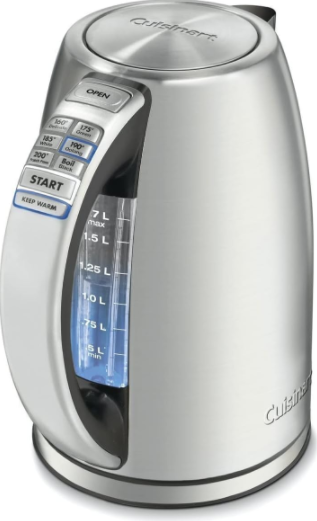
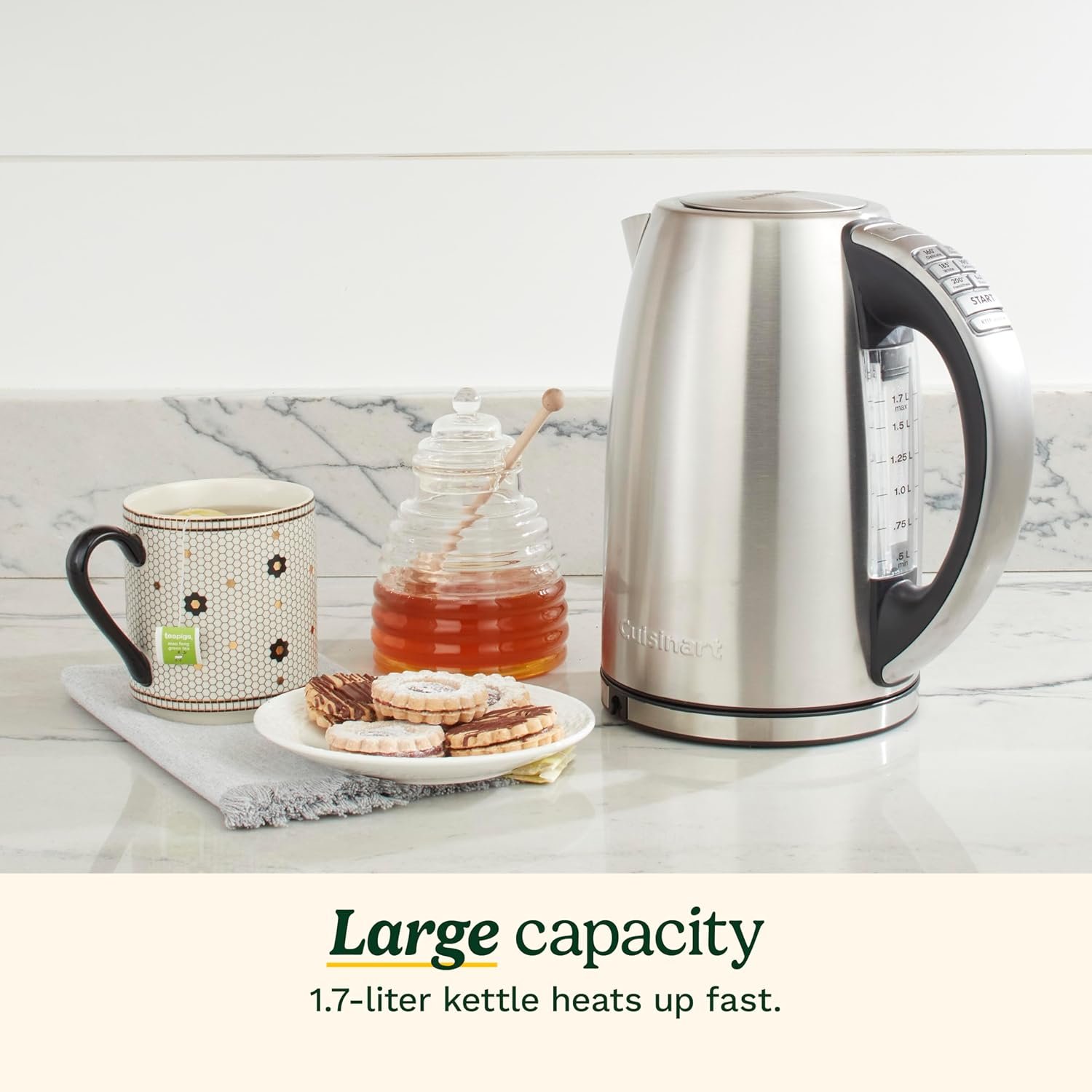
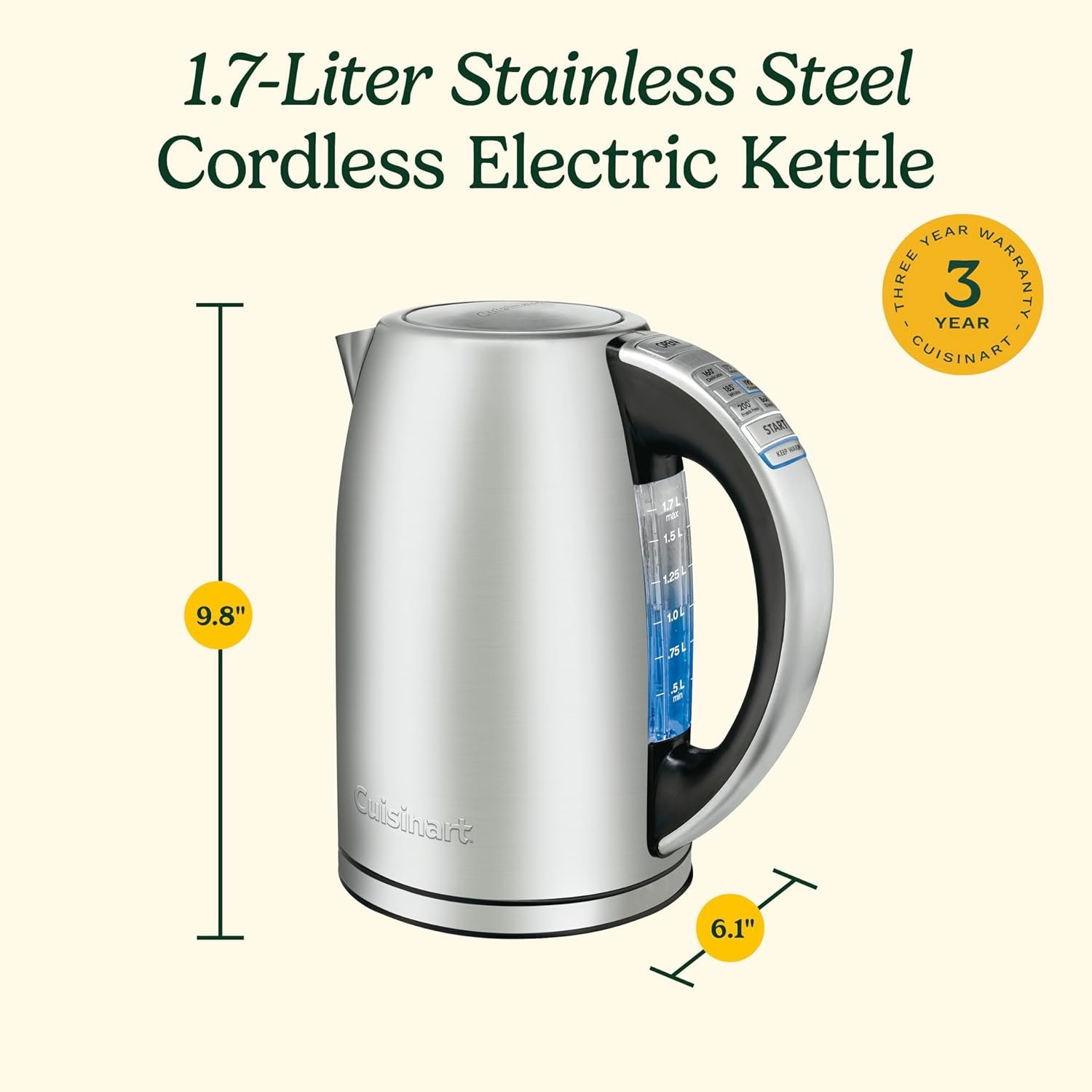
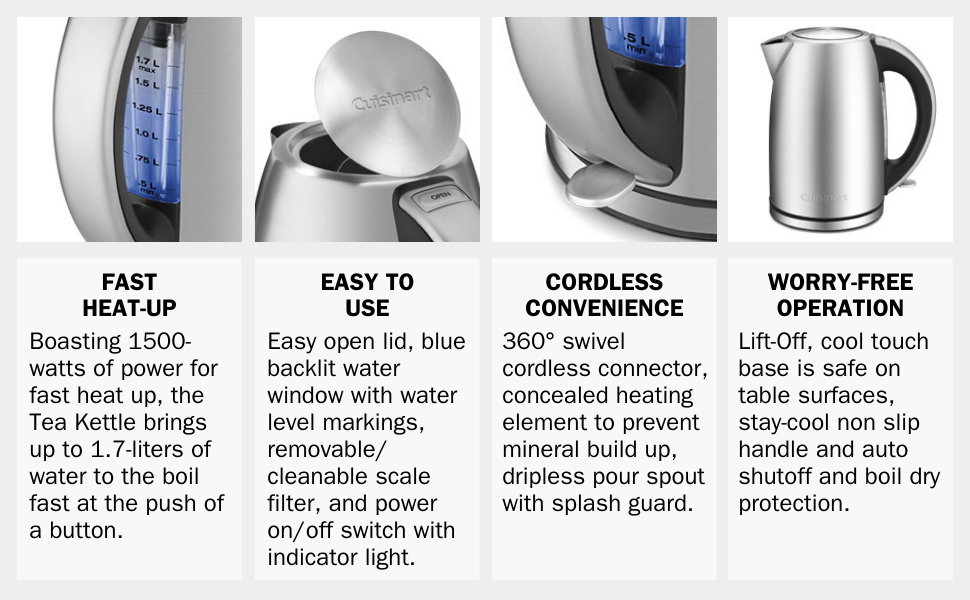
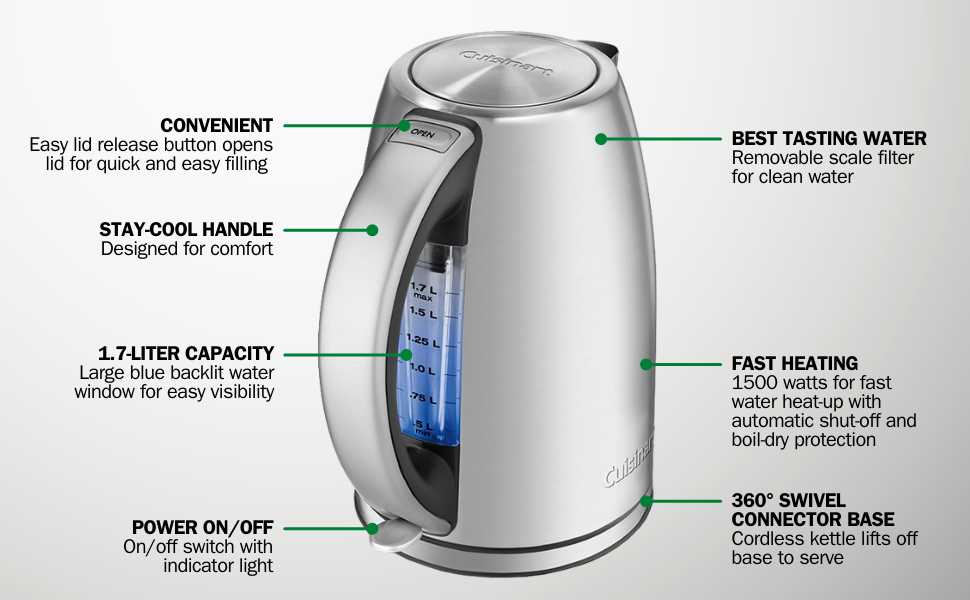
- FAST HEAT-UP: The Cuisinart Electric Kettle features 1.7-liter capacity and 1500 watts of power to bring water to a boil quickly. making it ideal for brewing tea. French press coffee. oatmeal. soup. and more
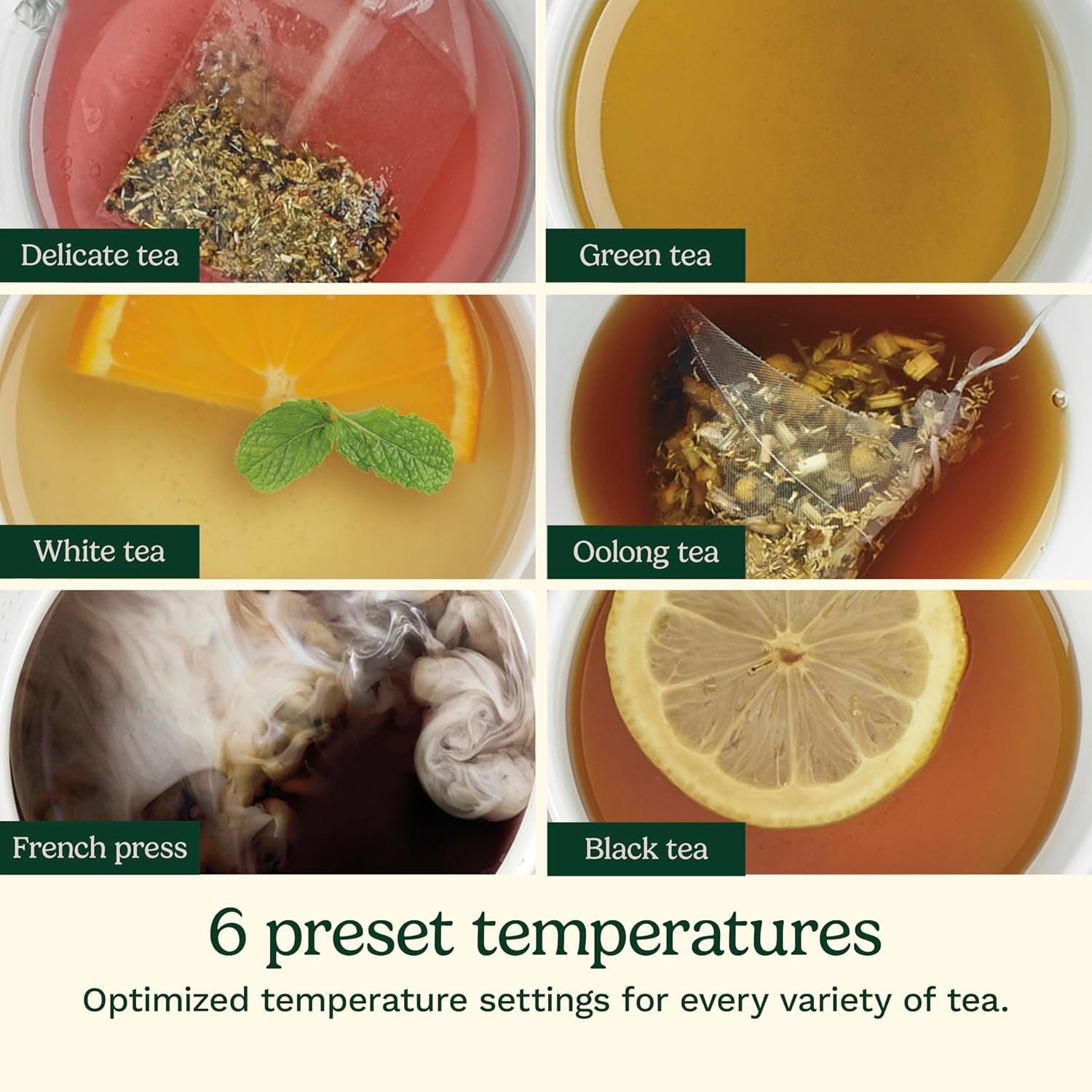
- 6 PRESET HEAT SETTINGS: With 6 preset temperatures ranging from 160°F to 200°F. this electric tea kettle is optimized for delicate tea. green tea. white tea. oolong tea. French press. and black & herbal teas
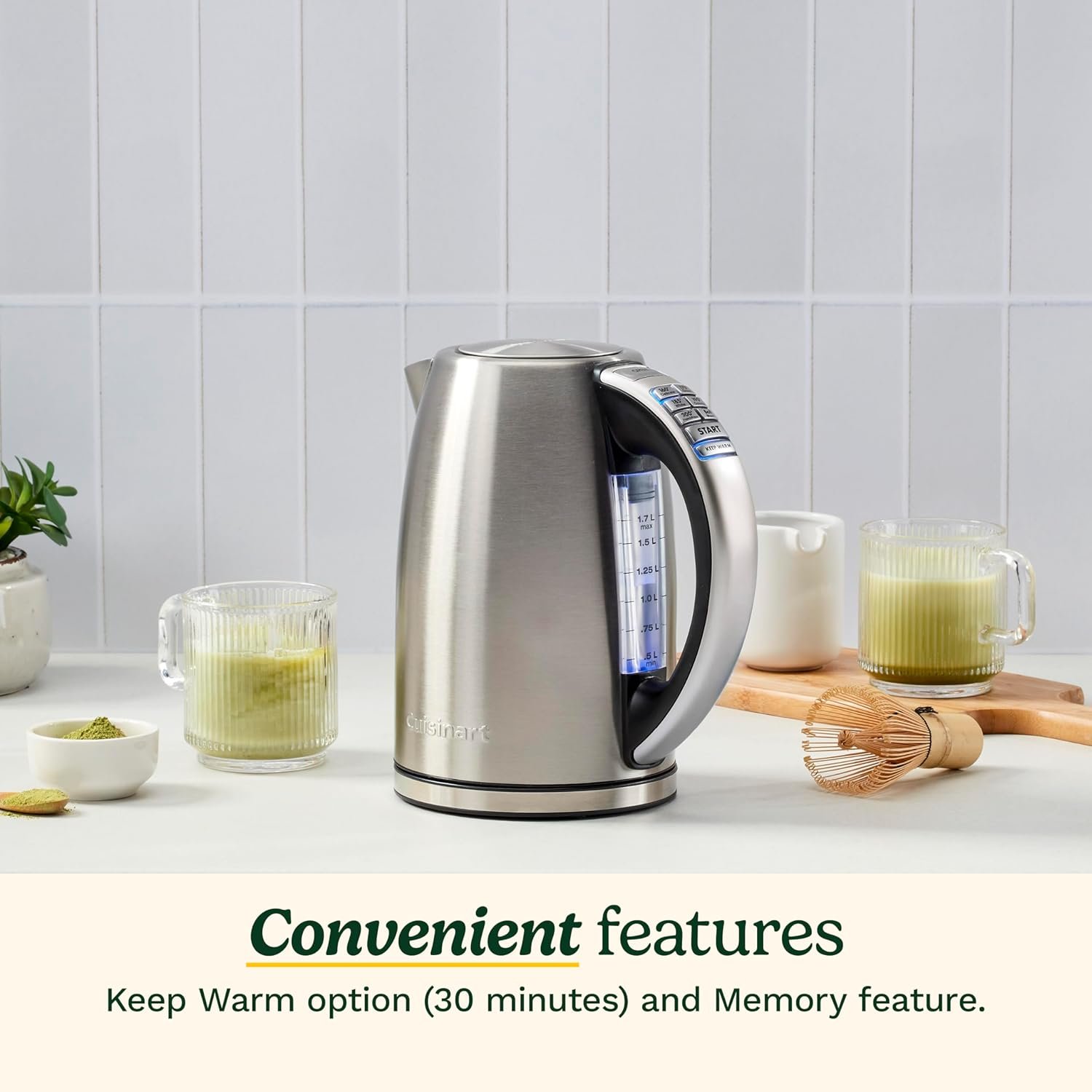
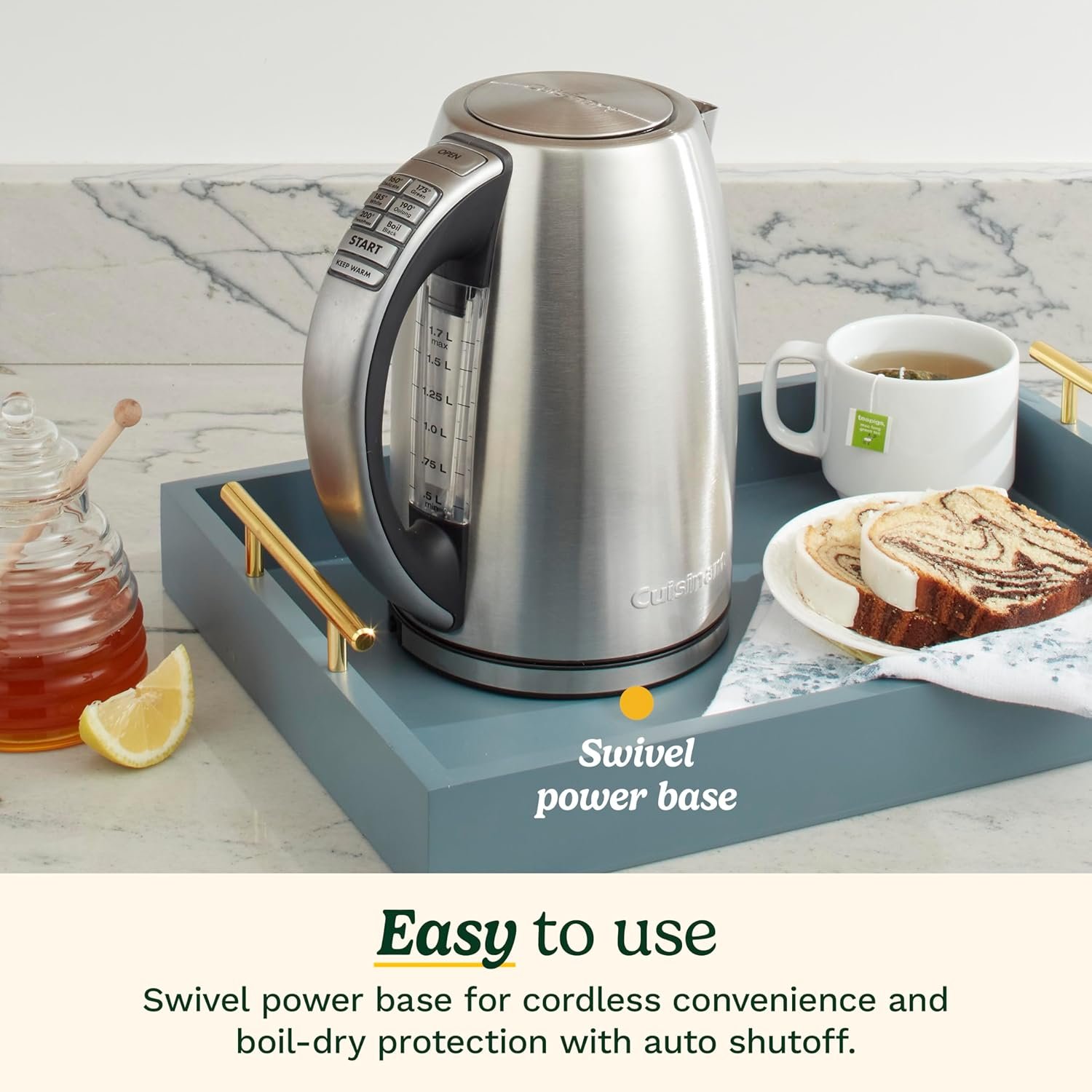
- SAFE & USER FRIENDLY: This Cuisinart kettle features one-touch controls with blue LED indicators. a 30-minute keep warm option. and boil-dry protection with auto shutoff
- CORDLESS CONVENIENCE: The hot water kettle rotates on a 360° swivel connector base for cordless convenience and features a stay-cool nonslip handle for safe serving
- MEMORY FEATURE: A convenient memory feature allows the Cuisinart Electric Kettle to be lifted off base for 2 minutes without shutting off or losing its place in the brewing process
From the manufacturer
| Color | Stainless Steel, Brushed Graphite Gray, Caskata, Pistachio, Red, White, Marble |
|---|
By anyway we decided to go full metal. This one is really good. Its solid. It even has this beep beep for when its ready. And the auto-reheat or whatever its called, it actually does keep the water hot. It cycles for like 30 minutes to make sure the water is always close to boiling. Pretty neat. Nothing to improve here, it is really good.
So I bought a spare.
Also has a thermometer to set the temperature correctly for the brew, coffee or tea.
Things I like about the kettle include being able to set a temperature and having the heating stop automatically. I like being able to set different temperatures for different uses. I mainly use it for coffee (in an Aeropress) and for black tea, which I set to 180°.
There is one major flaw I wish I had known about before purchasing: when the power goes out, the digital temperature resets to 212°, so I have to reset it to 180° every time. A backup battery, like in digital clocks, would easily fix this. Another dislike is the temperature range—the kettle can reach 212° for boiling, but the lowest setting is 140°.
I also heat water for active dry yeast when making bread. Since water above 120° kills the yeast, I have to watch the temperature carefully and remove it before it gets too high.
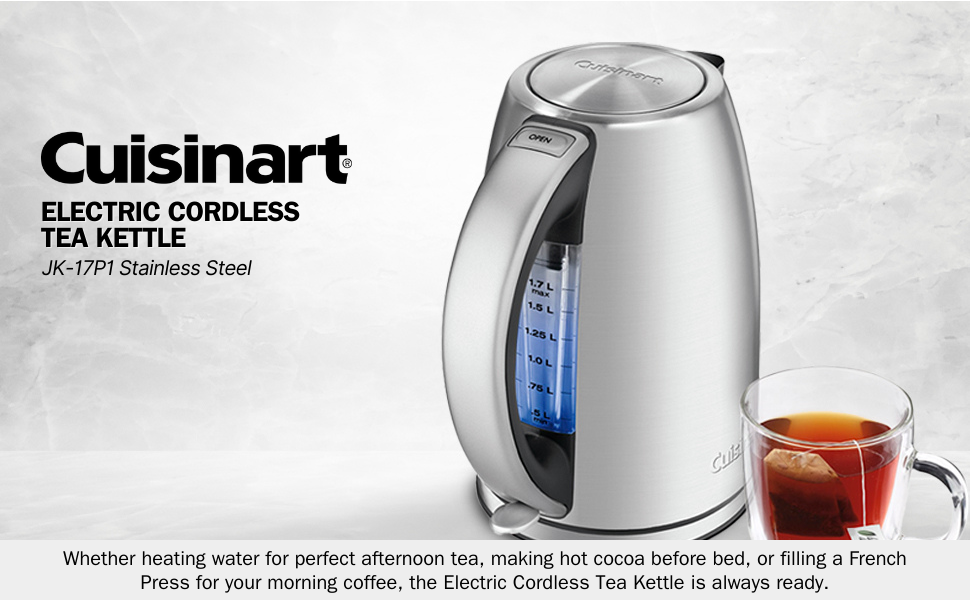
Backlit LCD indicates water temperature.
I enjoy different types of tea: black, green, white, herbal, etc, and the company Magic Hour from Ojai California is my new place to spend money. The tea selection is outstanding; the SKUs, neverending. There are goddess-themed teas, astrological sign-based teas, gemstone teas--how delightfully witchy can you get? Currently the tea blender is crafting a group of teas that reflect the archetypes of different Major Arcana tarot cards--a new one a month. The glass apothecary jars are works of art. The whole idea, fabulous--and intriguing--and my teapot on the stove just wasn't enough.
Enter this temperature controlled tea kettle. Plug in, press a tea-category button and then start and the pot does the rest, beeping pleasantly when the water is the temperature your tea prefers for perfect brewing.
I love it. The kettle is the perfect companion for those who make an art out of tea-drinking.
One caveat: the outside of the pot does get hot, so brushing up against it with a stray arm will burn. My trick is to refill the pot with another bottle of water to diffuse the heat. Perfect!
And, no, I do not work for Magic Hour Tea; I just find the product delicious and the perfect treat.
If you've done ANY research into brewing tea, you'll have come across the almost universally agreed upon conclusion that different teas brew best in different temperature ranges (times as well, also there can be debate on the actual best range for a given tea, but the general point still stands). So, having a kettle that can just heat water to a given temp (roughly, I'll hit that point later), rather than just boil then wait for it to cool enough, is a game changer, especially if it's reliably consistent.
This is where this kettle shines. When I bought it, I heated water to the 6 different temp presets indicated and then tested it in the kettle with a thermometer right when it finished, and the results were generally within +/- 3 degrees F depending on where I stuck the probe. I consider this to be a reasonable result for a kitchen appliance (it's not lab equipment after all) and the variance is small enough that most settings don't have any overlap (the difference between the 185 and 190 setting may be a bit too fine but the averages are relatively on point). It is important to note that when you pour the water into whatever cup you're using, you can almost instantly lose 10 degrees. This can be mitigated a bit by warming up the cup, or you can just heat the water 10 degrees hotter than the recommended brewing temp of the tea for all temps below boiling.
This makes such a difference! Even with relatively unrefined major grocery chain offerings of black, green, oolong and Darjeeling (I generally drink Twinings and yes, I know Darjeeling is technically classified as a black tea), I've found that proper brewing temps are far more vital than brewing times for controlling the dreaded bitterness of overbrewed tea. I find oolong, green and Darjeeling virtually undrinkable steeped in boiling water even if I only brew them for 2 minutes (I never do less than two because I don't like to just drink slightly colored water when I'm making tea). But bringing those temps down allows you to not only steep them longer to allow more flavor to come out but the lower temps release fewer of those bitter tannin compounds. Plus, with the "Keep Warm" option, you can set the kettle to heat up while you're taking a shower knowing that, whenever you eventually get out and are ready to finally pour out the water, it'll be within a few degrees of where you set it as long as there's still enough water left to keep the heating element from overheating.
Now you'll have to experiment with the teas you prefer to drink as while the suggestions underneath the temp presets are a good starting point, I've diverged from a number of them based on my taste preferences. But at least with this kettle you have the option.
My only mild nit-pick was with the scale screen. When installed, I found it made it difficult to pour all of the water out of the kettle so a little bit would remain standing in it, which I didn't like. And the small lip around the top makes it impossible to pour the remaining little bit out from the top. Removing the screen was very easy, though, and leaves only a small threaded rod sticking out of the inside of the pour spout that's never caused me trouble. And as long as you don't let ridiculous amounts of scale build up in your kettle (which is very easy to clean with boiling one or two passes of 50/50 vinegar/water solution even without scrubbing), the purpose of the screen in rendered irrelevant anyway. Removing the screen allows all of the water to pour out easily and completely, which is great if you're usually heating single cups of water at a time (the minimum volume is .5 liters, which is a bit more than a standard 12-16 oz cup).
So, if you've read this far, all I can say is buy this kettle. And, once you get it, if you want to perform a personally verified experiment, get some Twinings Green tea at Walmart then brew a cup from boiling for 2 1/2 minutes then a cup at 185 for 2 1/2 minutes. The difference is night and day. Happy brewing!
After buying it as a Christmas present for myself, I have thoroughly enjoyed it and have used it all day long every day. I read the bad reviews before and after I bought this kettle. Here are some observations from what I read in the 1 and 2-star reviews. For those of you that have had the kettle only last for a few months, to a year... I know that this kettle is expensive and should last longer. I would bet that after you pour a cup out of your kettle, you just set it back on the stand and walked off. This will put it into the hold temperature mode for about 30 more minutes. I know this is a feature but do you really need it to hold 212 degrees for an additional half hour? If you turn it off and then go back 30 minutes later and heat it again, it only takes a minute or two. Leaving it on puts unnecessary extra wear on the product fuse and heating base. I'm not defending it for burning out early, just suggesting a way to extend the life of the kettle. Next, I have read that after a month, a man and his wife still couldn't figure out how to use it. Really?! You push the temperature you want and hit start, it beeps and stops blinking when ready. Got to wonder about that poor rating. Another one complained that it didn't boil water any faster than their kettle on the stove. This is the one that gets me the most. If all you want to do is boil water, then save your money and boil water on your stove. This kettle is designed for tea lovers and press drinkers where a more precise temperature is required. This is what it is designed to do. If you throw boiling water over say, green tea, you have destroyed it. Press is best at 200-205 degrees. I, personally, got tired of boiling water then standing there with a thermometer waiting for the temperature to drop for my press coffee. If you just want to boil water... skip this and save your money. Another complaint was that the bottom was flaking off the inside of the kettle. It's called "mineral deposit", from your water. A little vinegar boiled once a month will solve this. If you have a coffee maker (it's the number one reason it will quit working) or a tea kettle on your stove, it's in there too. Another complaint was it was hard to fill and see the level. If you pick it up off the base and set it back down, it will light up and it becomes the easiest item you'll ever own, to refill. And lastly, several complained it was hard to keep fingerprints and dirt off of it. It's 'STAINLESS STEEL', wipe it with a damp sponge and dry it off. I have enjoyed it so far because it does what it is designed to do. A little preventive maintenance (turn it off when not needing it), routine cleaning ( as you should be doing with your coffee maker) and common sense ( the biggie) then hopefully you will not regret purchasing this kettle. For those that have treated it correctly and still had problems, you have an actual right to complain, but those other reviews, like described above, c'mon guys... common sense.
=== Part 1: Why to get an variable temperature electric tea kettle ===
For anyone who drinks tea (unless it is exclusively black) or makes coffee outside an all-in-one, department store drip-brewer, this is absolutely indispensable. Though most recipes have been built to use only room-temp or boiling water (since those are the only temperatures to easily reach with consistency), more cutting-edge cooking as well as coffee/tea prep requires more finesse. Unless you're willing to watch the proverbial pot boil with a thermometer in hand, this is the only way to heat water on such occasions.
=== Part 2: Concerns / questions raised (and/or) left unanswered by other reviews ===
I won't go into detail about well-established pros and cons covered in other reviews, but I would like to make clear a few things I couldn't determine from reviews/specs before I bought mine:
("Hot sides/surfaces"): Yes, the sides get hot, and yes, it is startling to touch the metal outer wall when the water is hot. However, according to my IR thermometer, the surface never gets much above 130 degrees. Sure, that's hot and you should avoid contact, but for comparison many people's hot water heater is set this high and (as validated by my rather stupid intentional touch test) an accidental touch is highly unlikely to cause even a mild first-degree burn unless you actively fight the reflex to instantly pull away.
("Construction / Material touching the water"): True, the sidewall level indicator and the "frame" of the removable spout filter are made of plastic (the BPA content of which I have not conclusively proved or disproved) but the former is part of a small compartment which only a small amount of water reaches and which has very limited circulation, and the latter is removable. The entire rest of the construction that touches water is steel. Since hot water dissolves BPA from plastics, and aluminum's role in neurodegenerative disease is unclear, iron/steel and glass are pretty much the only materials I trust completely for food storage/preparation containers. In this regard, this kettle is the safest option I've found.
=== Part 3: Operational test data ===
As a tea fanatic with a minimum of four kinds of tea always on hand (black, red/oolong, green, and white) and general geek, I have meticulously measured the actual temperature of the water in the kettle for the various settings. I share them here in hopes they will provide a useful operational profile for buyers interested in temperature variability. (Bear in mind that the container you pour into will greatly affect the water temperature, so remember to preheat it by filling it with hot water right before use.)
Button | @ First Trigger Completed
Label | "Beep" Re-heat Re-Heat
--------|-------- -------- ---------
160 | 164 160 163
175 | 180 175 178
185 | 192 185 188
190 | 197 191 194
200 | 203 199 204
Boil | 214 206 214
(All temperatures are in degrees F, as registered by my probe thermometer in the top half of the water with the kettle fully-filled.)
=== - ===
I know this is half generally-relevant bullet points, and half geek-oriented test data, but I hope this review still has something useful for everyone.